Preparing for Grant Reporting Before It's Due
Published August 1, 2026 • Charity Check Resources
By the Charity Check Team
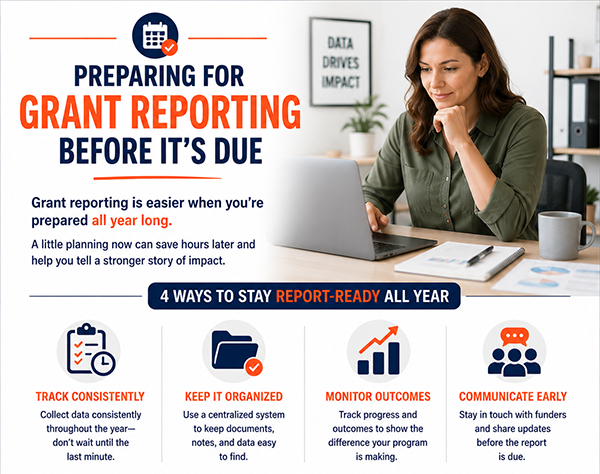
For many nonprofit organizations, grant reporting can feel stressful and time-consuming.
Deadlines approach quickly, staff scramble to gather information, and reports often require data from multiple programs, systems, and team members.
While reporting requirements vary from funder to funder, one principle remains consistent: organizations that prepare throughout the grant period experience far less stress when reporting deadlines arrive.
Effective grant reporting is not something that begins a week before a report is due. It begins the day a grant is awarded.
Key Takeaway:
The easiest grant report to complete is the one you've been preparing all year.
Why Grant Reporting Creates Challenges
Most nonprofits understand the importance of grant reporting. However, reporting requirements are often managed alongside many other responsibilities.
Information Is Stored in Multiple Places
Client records, attendance sheets, spreadsheets, case notes, and outcome assessments may all contain information needed for a single report.
Gathering information from multiple sources increases the likelihood of errors and consumes valuable staff time.
Reporting Requirements Change
Different funders often request different metrics, outcomes, and narratives.
Organizations that do not establish a consistent reporting process may find themselves rebuilding reports from scratch each reporting period.
Data Quality Issues Surface Late
Missing information often goes unnoticed until report preparation begins.
By that point, correcting records may require significant effort or may no longer be possible.
Start with the End in Mind
One of the most effective ways to simplify reporting is to understand reporting requirements before services begin.
"What information will we need to report six months from now?"
Asking this question early helps organizations collect the right information from the start.
Reactive Approach
Staff wait until the report is due, then search for information and discover missing data.
Proactive Approach
Staff identify reporting requirements at the beginning of the grant period and collect information consistently throughout the year.
Best Practices for Easier Grant Reporting
Understand Reporting Requirements Early
Review grant agreements carefully and identify all required metrics, outcomes, and deadlines.
Create a checklist that staff can reference throughout the grant period.
Collect Data Consistently
Consistent data collection reduces surprises when reporting deadlines arrive.
Standardized assessments, forms, and procedures help ensure information is available when needed.
Review Progress Regularly
Don't wait until the end of the reporting period to review data.
Monthly or quarterly reviews help identify missing information while there is still time to address it.
Document Success Stories
Numbers are important, but many funders also value stories that illustrate impact.
Capturing success stories throughout the year makes narrative reporting much easier.
Remember:
Strong grant reporting is built on consistent processes, not last-minute effort.
How Technology Can Help
Centralized client management systems can significantly simplify grant reporting.
Instead of collecting information in multiple spreadsheets and documents, organizations can maintain a single source of truth for client, program, and outcome data.
Technology can help organizations:
- Track required metrics throughout the year
- Monitor outcome progress
- Reduce duplicate data entry
- Generate reports more efficiently
- Improve reporting accuracy
The result is less time spent preparing reports and more time focused on serving clients.
Final Thoughts
Grant reporting does not have to be a stressful process.
Organizations that understand requirements early, collect information consistently, and review progress regularly are better positioned to demonstrate impact and maintain strong funder relationships.
Preparing throughout the year transforms reporting from a last-minute challenge into a routine part of program management.
Simplify Grant Reporting
Learn how Charity Check helps nonprofit organizations track outcomes, maintain accurate records, and prepare reports with confidence.
Learn More